-
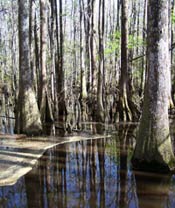
- Swamp
-
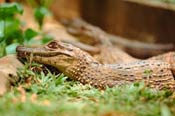
- Alligator
The Bulltown Swamp
Bulltown Swamp has its own stories to tell.
In Joseph LeConte’s autobiography he describes the boyhood adventures he and
his brothers experienced in the swamp. An African American man named Primus
made “a fine dugout canoe out of a large cypress log three feet in diameter.
The amount of joy we got out of that canoe was incalculable. Whole days were
spent in the exploration of the great swamp on which the plantation was
situated. I am sure we felt, on a small scale, all the joy and pride of
discoverers of unknown lands.” He also describes how “small alligators, six
and seven feet long, abounded in the swamp and though we cared little for
them, interfered somewhat with our swimming.”
It’s important to remember too that it was the water, of this black water swamp ecosystem,
that made inland rice production possible at Woodmanston. Check our
“History” page for details.
The swamp portion of the nature trail can be difficult at times but it is
well worth the hike to experience the incredible tree formations, mosses,
lichens and natural scenery. This cypress and gum swamp, which so enticed
Louis and other scientists, now hosts a variety of native plants.
The swamp has a mystery all its own. As you explore its depths,
especially during rainy season, you will discover a number of swamp
creatures including alligators, otters, frogs, toads and lizards, to
name a few. Recently several baby alligators were discovered in a
flooded rice field at the end of one of our swamp trails. Birds, including swamp sparrows, eastern bluebirds and
gray-blue gnatcatchers, may also appear. In the shallow waters
or along the water’s edge you may also observe egrets or herons wading
gracefully in search of a meal of fish, frogs or insects.
As areas of great ecological diversity, the swamp, nature trail and
gardens survive as living memorials to the botanical achievements of
Louis LeConte.
Check the “Plan Your Visit” and “Contact Us”
pages for details concerning your visit to the swamp.