-
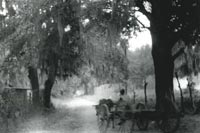
- 19th century plantation scene
-
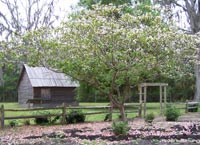
- Slave cabin and Tung tree
African American History
In the 19th century when LeConte-Woodmanston was the largest plantation in
St. John’s Parish (now Liberty County), 231 African Americans were enslaved
there.
In the early days everything necessary for daily life was done on the
plantation. African Americans were tanners, shoemakers, blacksmiths,
carpenters and masons. They also participated in hunting, gardening, caring
for the house and children and guarding the plantation.
The purpose of the plantation was growing rice for profit. This involved
clearing the land, building dams and dikes, planting, harvesting and
preparing the product for shipment and delivery. The creation of this
plantation was a very arduous task. This work, all done by
African Americans, required not only the knowledge of agricultural practices
but engineering, organizational and management skills. Many of those
enslaved were descendants of individuals who came from western African
regions where rice was cultivated. They
brought and contributed their rice cultivation knowledge and skills to this
plantation and others in the area. It was their knowledge and
work that made Woodmanston, and other 18th and 19th century plantations,
successful.
The cultivation of rice required hard work in unhealthy environments. Wealthy
planters and their families often left for summer retreats to avoid high
temperatures and diseases like malaria. Management of the plantation was then
left to a white or an African American overseer and the remaining
enslaved individuals.
Those enslaved on the plantation changed their name to LeCounte following
their release from bondage. A LeCounte family tree can be found at LeCounte
Park in Liberty County.
As a part of our focus on African American history at LeConte-Woodmanston
and in Liberty County, we are part of
The Flood Gate Narrative oral history project which began in September
2009. We are partnering with
Dorchester Academy and
SCAD to complete this important project.
Descendants of those enslaved at LeConte-Woodmanston remain actively
involved in preserving the history of their ancestors. For
example, they were responsible for completing the restoration of the
slave cabin on our grounds in 2003. A reunion of descendants is held at
LeConte-Woodmanston every two years.
According to a representative of the Historic Preservation Division of
the DNR in Atlanta, LeConte-Woodmanston will be part of the National
Park Service’s
Gullah-Geechee National Corridor.