-
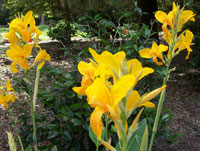
- Yellow Canna
-
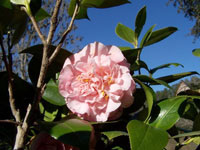
- Debutante Camellia
Garden History
In 1765 the American naturalist John Bartram passed by Woodmanston.
Fifteen miles south of the plantation he discovered the famous “lost”
Franklinia Altamaha. By the early 19th century botanists from around the
world were drawn to the region in search of rare and unknown plants. They
found many of these plants at Woodmanston under the meticulous care of Louis
LeConte. Louis cultivated and built an extensive
knowledge of coastal Georgia’s native flora. Although he didn’t belong
to any professional scientific organizations or publish his research, he
shared his knowledge freely with leading naturalists and botanists who
offered him their respect and consulted him frequently. Louis associated
with William Baldwin, John Abbot, Stephen Elliot, Thomas Nuttall and John
Torrey. Several of these famous men visited Woodmanston where Louis led them
on specimen collecting excursions. Louis also sent specimens to his
relatives in New Jersey and Philadelphia and solicited samples from their
gardens to try at Woodmanston.
Louis’s
botanical gardens measured over an acre. His collection of Camellias
was extraordinary. Some reached fifteen feet high with trunks over a foot in
diameter. He is also believed to have cultivated 40 different
species of flowering bulbs, some native and others from such diverse
locations as Barbados, Mexico, Portugal and Spain. In a natural bog, behind
the formal gardens, he collected and grew water loving plants like yellow and
blue Canna, Spider Lily and Hibiscus.
After the death of his wife, Louis devoted much time and energy to his
garden in an effort to divert his grief. His son, Joseph, recalled that:
“This large garden was the pride of my father. Every day after his
breakfast…he walked about the garden, enjoying its beauty and neatness
and giving minute directions for its care and improvements.”
The LeConte garden reached its peak at the time of Louis’s death in
1838. Research indicates that there were probably no finer specimens of
Camellia Japonicas and bulb-type plants growing in any single garden in
America. Read the Southern Edition article –
“Daffodils in Early Southern Gardens”.
For information about how you can come and visit the gardens go to the
“Plan Your Visit” and “Contact Us” pages.