-
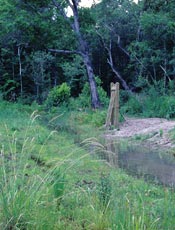
- Rice field floodgate
-
Plantation History
Woodmanston was established in 1760 by John Eatton LeConte as an inland
swamp rice plantation. This form of rice production actually began in the
American Southeast in 1724. It relied on the diversion of slow moving swamp creeks
into a reservoir created by earthen dams. Water from the reservoir was then
released through trunk gates into fields at lower elevations of the swamp
where the rice was grown. After irrigation, this water was released into
even lower elevations of the swamp where it continued its flow toward the
ocean. It took between 200 to 500 acres to profitably cultivate rice, often
subdivided into more manageable fields of 10 to 20 acres. A typical rice
crop yielded 30 to 60 bushels an acre and weighed between 41 and 49 pounds
per bushel.
This early form of rice production was replaced by the tidal flow system, at
the turn of the 18th century, by
many plantation owners. In order to employ this new system, plantations had
to be built along major coastal rivers. These plantations were not as
susceptible to flood and drought as were the inland swamp plantations. Despite this rice
production continued at Woodmanston, using the original method, until the end of the Civil War and even
after by local freedmen.
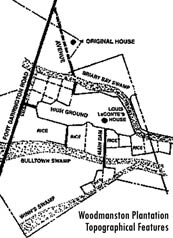
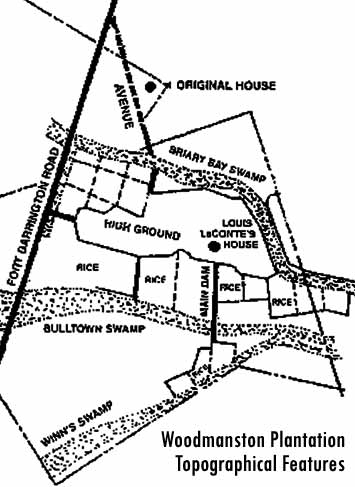
The first house at Woodmanston, located near today’s Barrington Ferry Road, was burned in 1778 by the British because
John Eatton LeConte was an American Revolutionary.
Louis LeConte moved into the second home, called the hunting lodge, in 1810.
It was there that he brought his wife, Ann. It was located closer to the
rice fields and slave quarters. Although no pictures are available, researchers agree that the
house was probably a raised-basement low-country plantation house similar to others in the area and fortified by a stockade to defend against Indian
attacks. Homes were raised to avoid flooding, improve air circulation and keep the house cool. People also thought it
would protect against harmful “vapors” from the swamp. The house had two
full stories and an attic that became Louis LeConte’s laboratory. Brick
pillars
still mark the old home site at Woodmanston.
This is only part of the story. There is much to learn on each of our history
pages.